
- April 10, 2026
- admin
- 2:46 pm
Aurangzeb Seeks Business Input on Budget and Economic Priorities
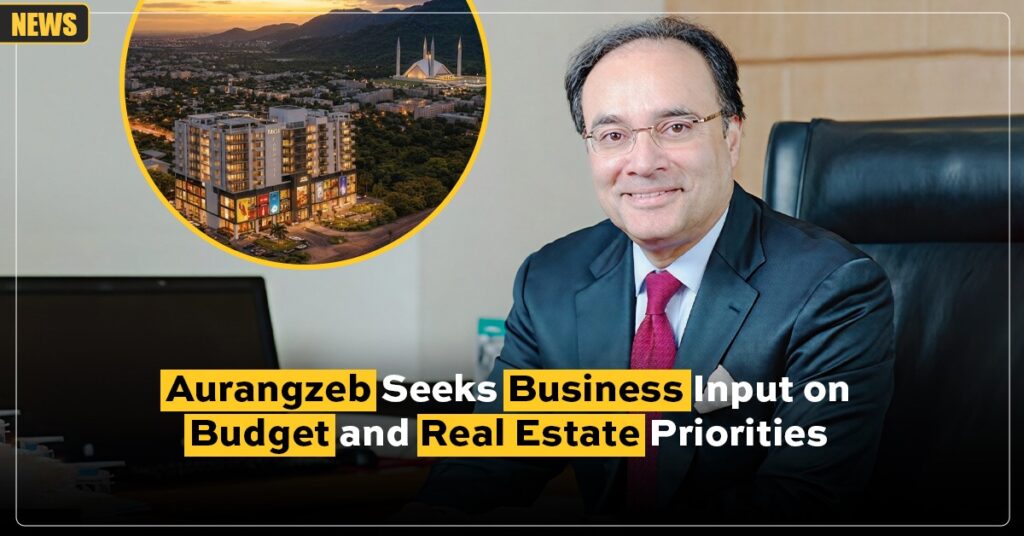
Islamabad: Federal Minister for Finance and Revenue Senator Muhammad Aurangzeb chaired a virtual meeting with presidents and senior office-bearers of chambers of commerce and business organisations from across Pakistan to discuss the current economic situation, priorities for the upcoming budget, and ways to support economic recovery and growth.
The nearly 90-minute session was attended by Minister of State for Finance Bilal Azhar Kayani, along with senior officials from the Finance Division, Revenue Division, and Tax Policy Office. Aurangzeb made clear from the outset that the meeting went beyond taxation alone, stressing that Pakistan was gaining greater international prominence amid shifting regional dynamics and that regular engagement with the business community was something the government intended to sustain.
On the economic front, the minister said Pakistan had entered the current difficult period from a position of relative stability, backed by fiscal discipline and stronger external buffers. He confirmed that the government had met its $1.4 billion Eurobond obligation and assured participants that all upcoming financial commitments would be honoured.
Business leaders raised a wide range of concerns. The cost of doing business featured most prominently, with participants noting that Pakistan’s costs are significantly higher than those of neighbouring countries, making it harder for exporters to compete. Reducing freight charges, negotiating lower tariffs with the United States, and benchmarking Pakistan’s business environment against regional competitors were all proposed. On the domestic side, participants called for stronger support for small and medium enterprises, a lower policy rate, tax incentives for exporters, and an increase in the Federal Board of Revenue registration threshold from Rs250 million to Rs350 million.
The real estate sector received considerable attention throughout the discussion. Participants urged the abolition of Section 7E, a tax on deemed rental income widely seen as a burden on the property market, and called for a dedicated support package for the sector. Adding to this, Hamid Ateeq informed participants that the Prime Minister had already directed government departments to submit proposals specifically aimed at promoting the real estate sector, a signal that the issue carries weight at the top level of government and that meaningful policy movement may already be underway.
Regional connectivity was another key theme, with one participant proposing that profitable banks be required to open branches in Central Asian countries to unlock trade potential. Concerns about a possible decline in Gulf remittances and the importance of renewable energy in reducing business costs were also raised.
Wrapping up the meeting, Aurangzeb reaffirmed the government’s commitment to working closely with the private sector, describing sustained public-private collaboration as essential to moving Pakistan’s economy toward stability, resilience, and long-term growth.